
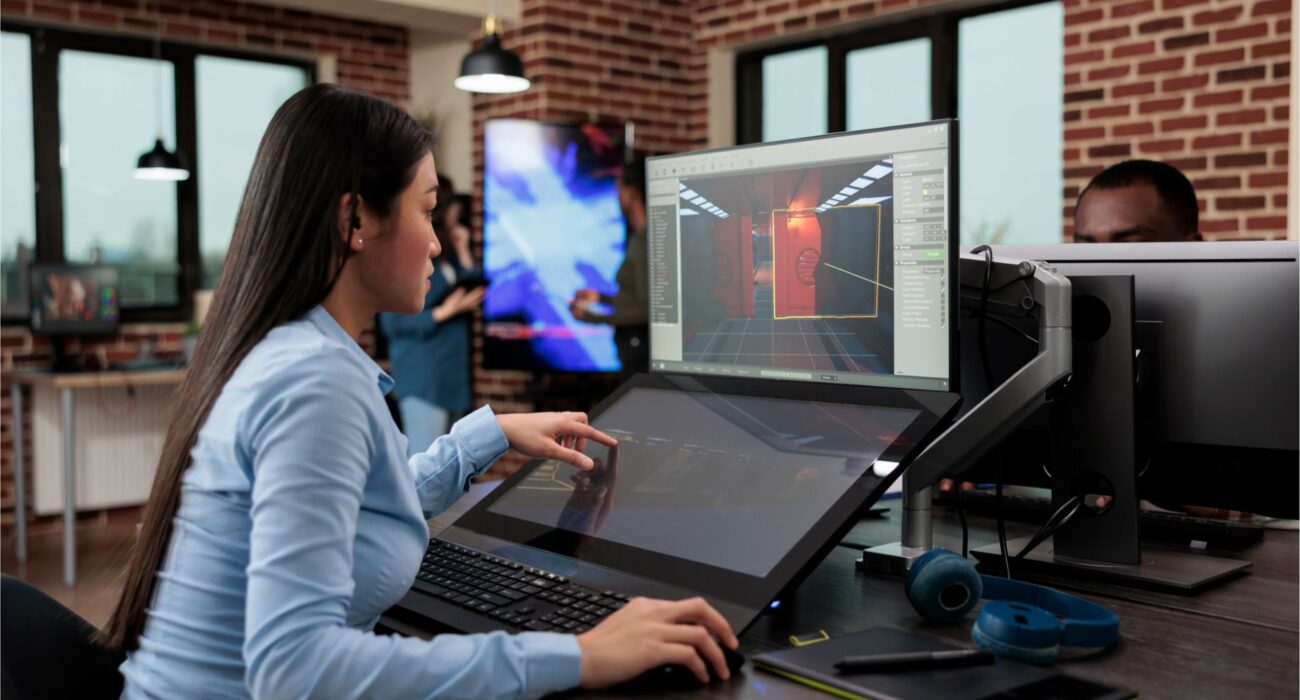
In today’s digital world, Game Design stands at the intersection of art, logic, and innovation — where creativity meets technology to bring immersive worlds to life. From the stunning visuals of open-world adventures to the strategic depth of puzzle games, every element of a game reflects thoughtful design and innovation.
At Vstrok, we believe that Game Design is not just about developing entertainment — it’s about crafting experiences that challenge the mind, evoke emotions, and inspire creativity. But what makes Game Design such a powerful blend of multiple disciplines? Let’s explore how art, logic, and innovation work together to shape the future of interactive entertainment.
The Art Behind Game Design
Every great game begins with a vision — an artistic idea that gives it character, mood, and personality. The art of Game Design is about storytelling, visual aesthetics, and emotional engagement.
1. Visual Creativity and Aesthetics
From character design and environment art to lighting and animation, visuals play a vital role in shaping a player’s experience. Art direction defines the tone — whether it’s the vibrant worlds of fantasy games or the minimalist design of indie titles.
Game designers collaborate with concept artists, animators, and illustrators to craft visually stunning environments that captivate the player from the very first frame.
2. Storytelling Through Design
Good Game Design tells a story without necessarily using words. Every visual cue, sound effect, and movement communicates meaning. The environment itself becomes a storyteller — guiding players, setting moods, and evoking emotions.
At Vstrok, our design philosophy focuses on this creative harmony — where visuals don’t just look good, but also serve a narrative purpose.
The Logic That Drives Every Game
While art brings beauty and emotion, logic is the foundation that makes everything work. Game Design requires careful planning, systems thinking, and a deep understanding of user interaction.
1. Game Mechanics and Systems
Logic defines how players interact with the game world — how they move, score points, solve puzzles, or face challenges. These mechanics are built through programming, algorithms, and rules that ensure fairness, challenge, and engagement.
Designers must think logically to balance gameplay difficulty, ensure smooth user flow, and keep players motivated. It’s a careful balance — make it too easy, and players lose interest; too hard, and they give up.
2. Problem-Solving and Strategy
Every level or challenge in a game is an exercise in logical thinking — both for designers and players. Game designers constantly test and refine systems to ensure they are intuitive yet stimulating.
By blending logic with creativity, designers make games that are not only fun but intellectually satisfying — giving players the joy of solving problems in interactive worlds.
Innovation: The Heart of Modern Game Design
No two successful games are the same. What sets the best apart is innovation — the constant drive to do something new, surprising, and meaningful.
1. Pushing the Boundaries of Technology
Innovation in Game Design comes from experimenting with cutting-edge technology — from augmented reality (AR) and virtual reality (VR) to AI-driven storytelling. Designers today have access to powerful tools that allow them to create realistic physics, dynamic environments, and immersive experiences once thought impossible.
At Vstrok, we emphasize innovation as a core principle of Game Design education. We encourage designers to think beyond conventional methods, explore emerging technologies, and redefine what interactive entertainment can be.
2. User Experience and Interaction
Innovative Game Design also means understanding players deeply — their behavior, emotions, and motivations. Modern designers rely on data, psychology, and feedback to fine-tune experiences that keep players engaged.
Innovation isn’t just about technology — it’s about improving the connection between the player and the game. From intuitive controls to adaptive difficulty systems, innovation ensures every player feels included and challenged.
The Balance of Art, Logic, and Innovation
The magic of Game Design lies in balance. Art gives life, logic gives structure, and innovation brings evolution. Together, they create something greater than the sum of their parts.
- Art inspires emotion and storytelling.
- Logic ensures systems and mechanics work seamlessly.
- Innovation pushes design to new creative and technical heights.
A successful game designer knows how to merge these three aspects to create an experience that is both engaging and meaningful. At Vstrok, we train aspiring designers to master this balance — helping them turn imagination into interactive realities.
Real-World Examples of This Blend
Some of the world’s most acclaimed games — from The Legend of Zelda to Minecraft — showcase this perfect fusion.
- The Legend of Zelda combines artistic world-building with logical puzzles and innovative gameplay mechanics.
- Minecraft empowers players with limitless creativity while following clear logical systems.
- Journey transforms simple mechanics into emotional storytelling through stunning art and subtle innovation.
These games prove that Game Design isn’t just entertainment — it’s a unique form of interactive art powered by logical thinking and innovative spirit.
The Future of Game Design
As technology evolves, so does the world of Game Design. With advancements in artificial intelligence, virtual reality, and real-time rendering, the opportunities for creative expression are limitless.
Tomorrow’s games will go beyond screens — blending physical and digital realities, personalizing experiences, and enabling players to co-create virtual worlds. The future of Game Design will continue to rely on those who can think artistically, reason logically, and innovate fearlessly.
At Vstrok, we believe the next generation of designers will not just play games — they will shape the future of how we experience stories, art, and technology.
Conclusion: Crafting the Games of Tomorrow
Game Design is more than just a profession — it’s an art form that combines imagination, logic, and technological brilliance. It challenges designers to think creatively while solving real-world problems with innovation and precision.
If you’re passionate about games, storytelling, and technology, now is the perfect time to explore this exciting field.
🎮 Ready to start your journey in Game Design?
Join Vstrok and learn how to blend art, logic, and innovation to create games that inspire, entertain, and endure.